Self-Initiated-Proprietary working Product
Service Blueprint Architect
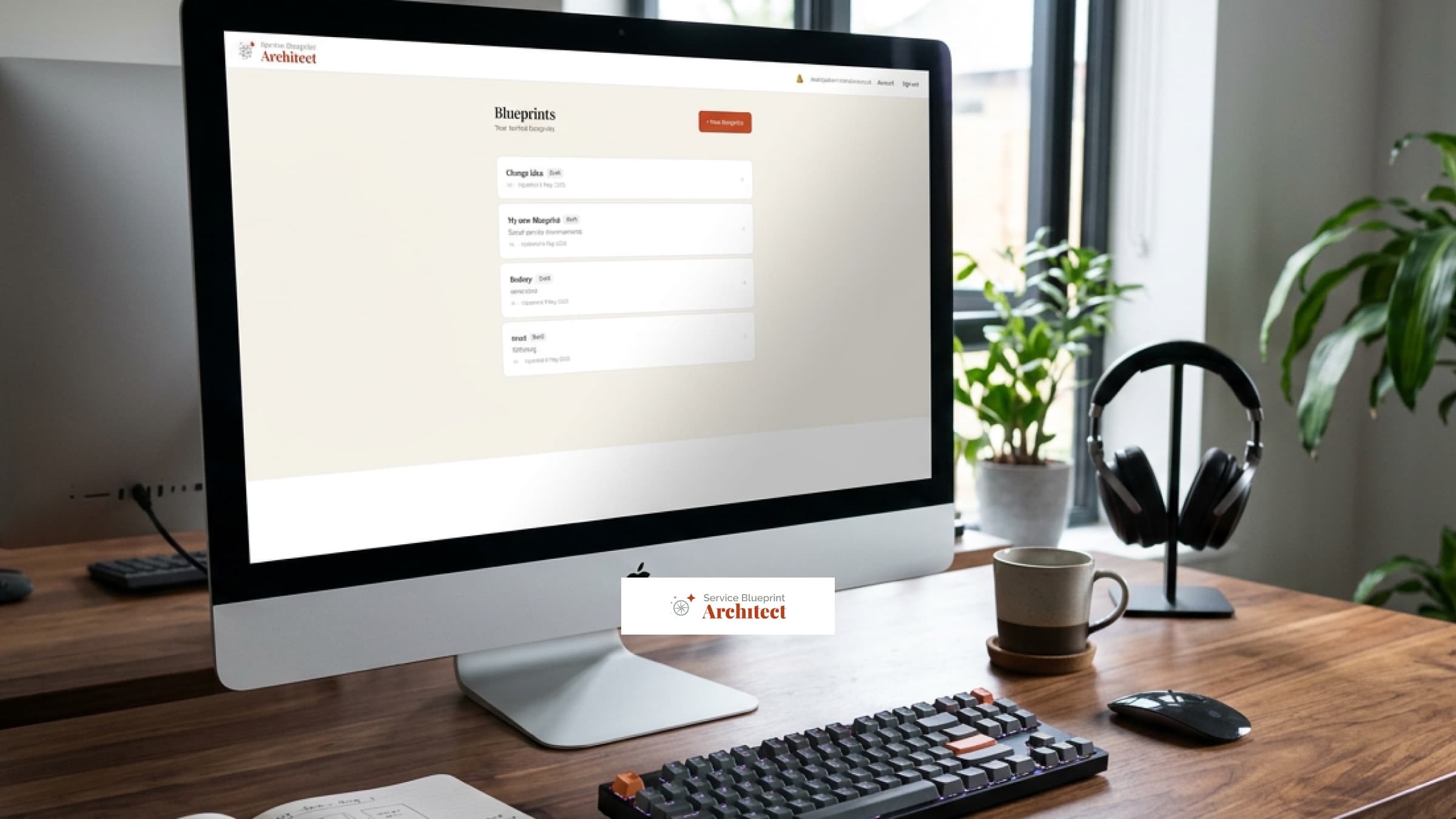
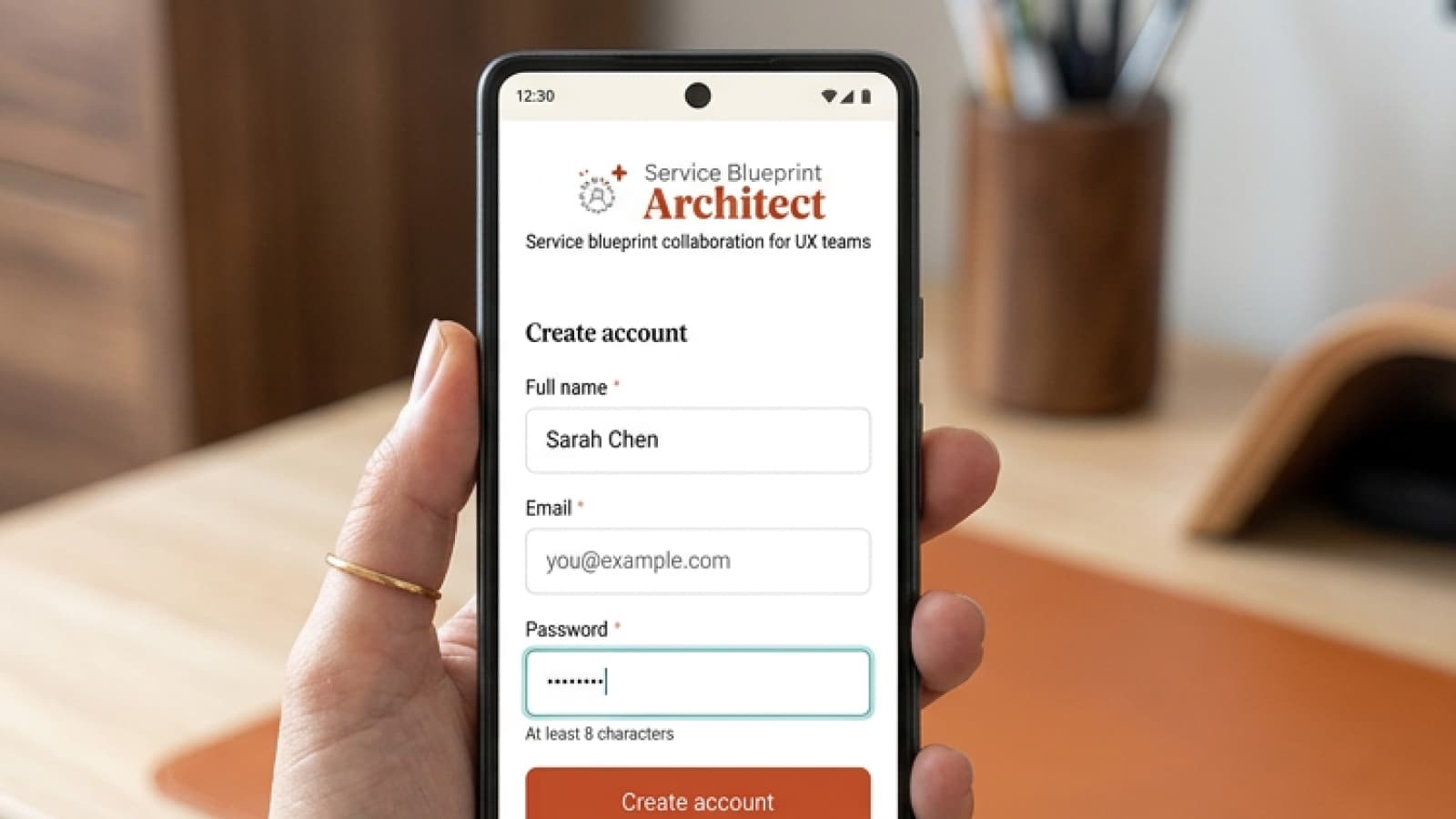
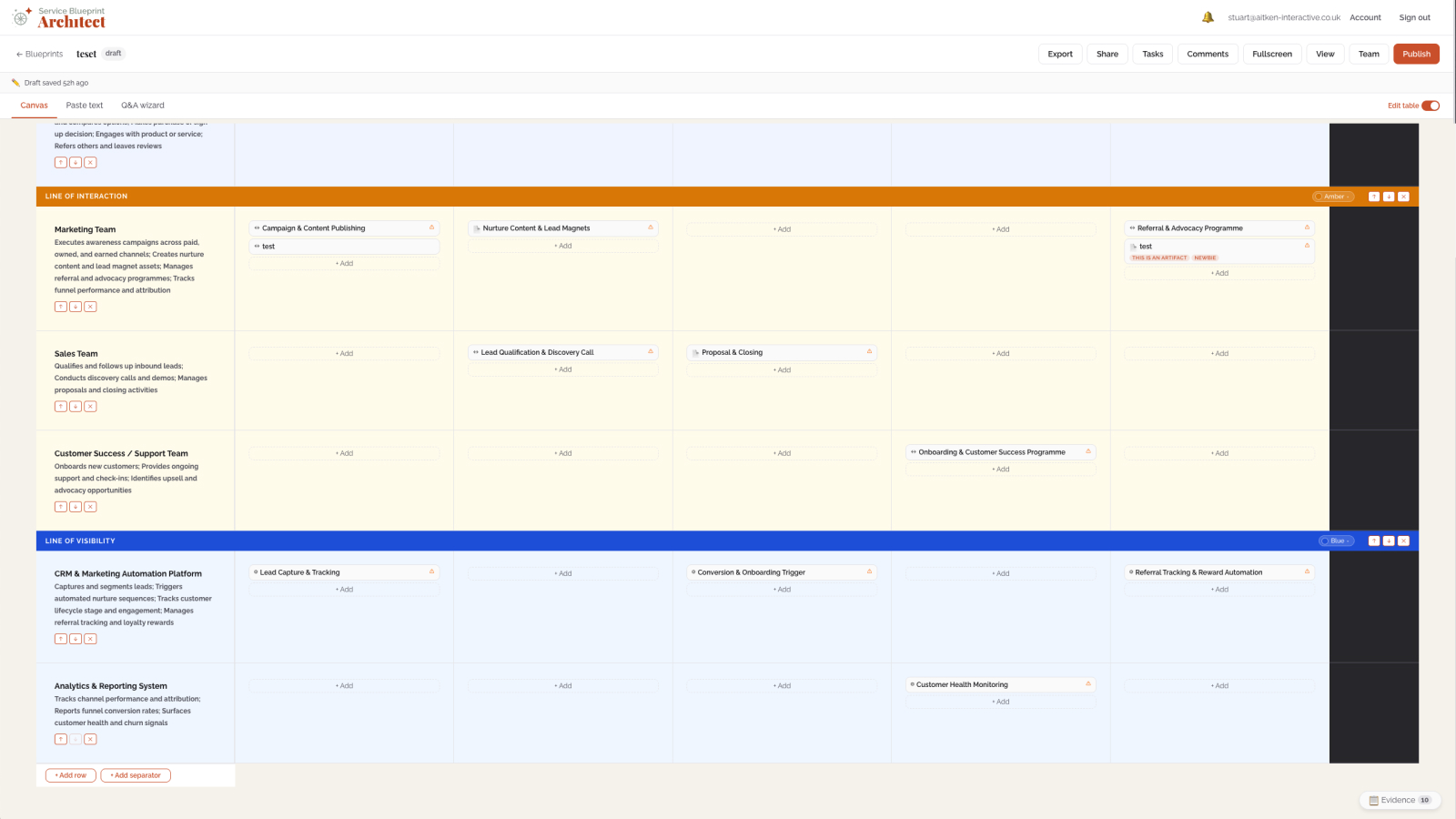
Service Blueprint Architect is a self-initiated product design project: a mobile-first, web-based platform that helps UX designers create, manage, and govern service blueprints collaboratively. The work covered the full spectrum of product design — from strategic architecture through data modelling, RBAC system design, API specification, and a five-phase implementation plan.
- Client
- Self-Initiated
- Role
- Product Designer & Architect
- Duration
- 14 weeks (planned)
- Year
- 2026
The Problem Statement
The Problem Statement
Service design is inherently collaborative, yet most teams were using disconnected tools: whiteboards, spreadsheets, Google Slides, and email chains. There was no single source of truth — and no way to govern changes, track approvals, or maintain version history across a team.
Service designers need to visualise complex user journeys across multiple actors, touchpoints, and phases. Teams need to approve changes, coordinate tasks, and audit decisions. Yet existing tools are either too simple for team use or too heavyweight and generic for service design specifically.
The core challenge: how do you build a tool that serves a solo designer, scales to a multi-person team with a governance workflow, and does all of this accessibly on mobile?
The Strategy
The Strategy
Five architectural decisions shaped everything that followed.
CMS-style staging over real-time collaboration — governance requires explicit approval. One draft per user per blueprint eliminates merge conflicts and supports decision-making workflows without the complexity of operational transformation. Simpler architecture, clearer team alignment.
WCAG 2.1 AA accessibility from Phase 1, not Phase 5 — accessibility forces clarity. Clear focus states, semantic HTML, and logical keyboard navigation benefit all users, and a mobile-first approach naturally emerges from the same constraints.
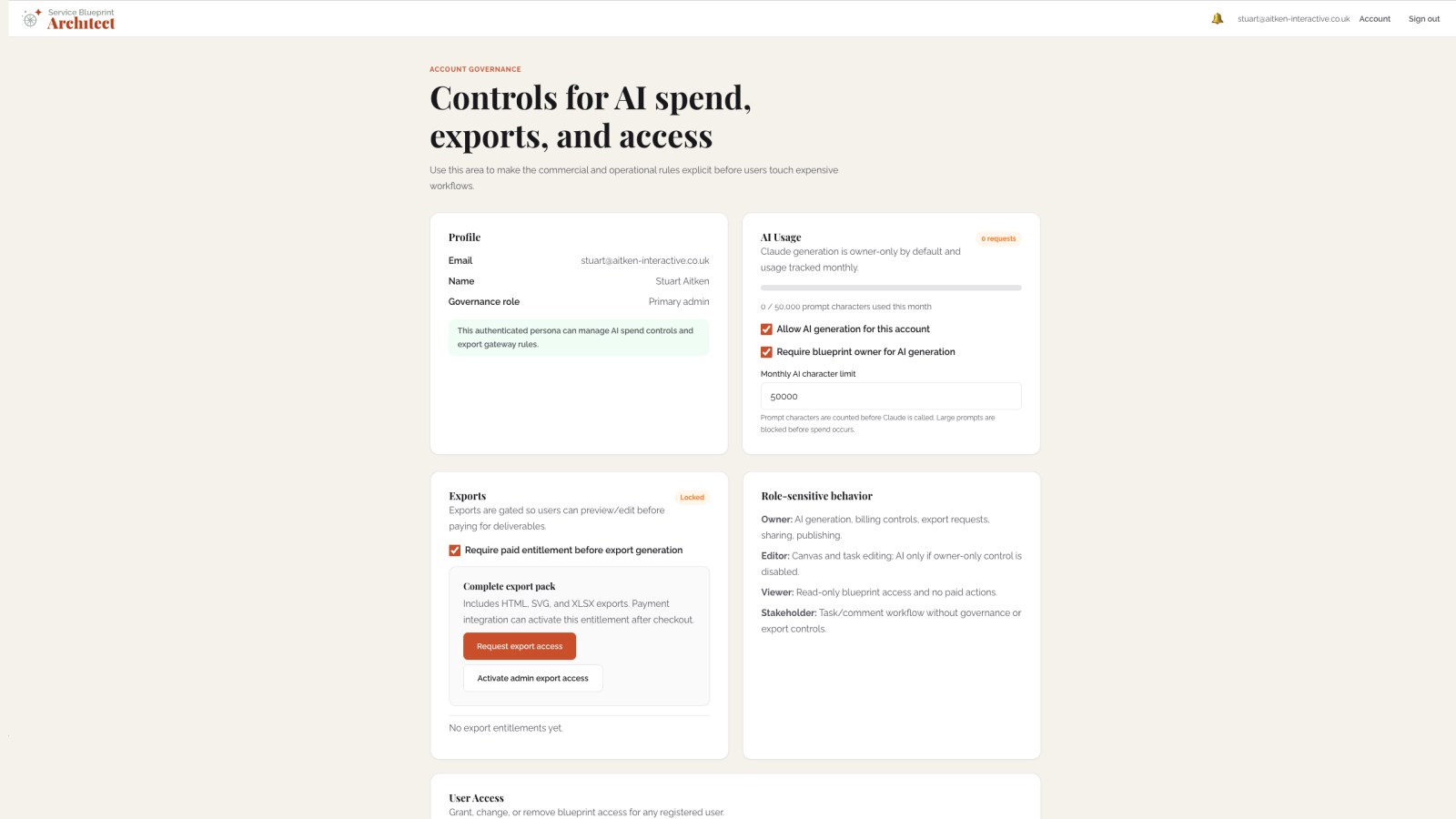
A four-role RBAC system (Owner, Editor, Stakeholder, Viewer) — roles that map to actual team personas rather than an admin/user dichotomy. Separating editing from approving from publishing removes ambiguity and enables genuine governance.
A canonical data schema as a single source of truth — one JSON structure that all input formats, transformations, and exports conform to. Consistency, testability, and future-proof integrations follow.
A five-phase modular build plan — breaking 14 weeks into pauseable, testable phases means an MVP can ship after Phase 2 without abandoning the broader vision.
Approach
Approach
The design work spanned five distinct activities, each producing a concrete artefact that feeds into the implementation.
Problem Definition & Scope Setting
Mapping the gap between how service design teams actually work (disconnected tools, email approval chains, lost version history) and what a purpose-built platform could provide. Defined the initial scope as a mobile-friendly blueprint creation tool, which evolved into a full collaborative platform with drafting, approval workflows, task management, version control, and RBAC.
Architectural Decision-Making
Evaluating the core trade-offs: real-time collaboration vs CMS-style staging; granular permissions vs semantic roles; format-specific data models vs a canonical schema. Each decision was documented with the alternatives considered and the rationale for the chosen approach — producing a decision log that any developer can follow.
Data Modelling & API Specification
Designing eight normalised PostgreSQL tables covering users, blueprints, drafts, tasks, approval workflows, audit logs, notifications, and permissions. Specifying 26 REST API endpoints with RBAC applied at every layer — authentication, authorisation, and business logic kept cleanly separated.
Governance & RBAC System Design
Designing the four-role permission system and the approval workflow engine — how drafts move from creation through review to published state, how Stakeholders approve without editing access, and how the audit log captures every state change for accountability.
Phased Implementation Planning
Producing a 14-week plan with five self-contained, pauseable phases: Foundation (auth + schema), Core Editor (input parsing + export), Collaboration (drafts + approvals), Task Management, and Real-Time + Accessibility polish. Each phase has clear completion criteria so work can pause and resume without losing context.
The Solution
The Solution
The output is a complete product specification — 15,000+ words covering every layer of the platform.
The frontend is React with a mobile-first responsive design (320px, 640px, 1024px breakpoints), touch-first interaction targets, keyboard navigation, ARIA labelling, and prefers-reduced-motion support throughout.
The core logic is four modular subsystems: an Input Layer accepting prose, CSV, Q&A, and image-based entry; an Enrichment Layer that suggests touchpoints and infers pain points; a Visualisation Layer producing HTML, SVG, XLSX, and Figma exports; and the Canonical Schema binding them all together.
The backend is Node.js with PostgreSQL — JWT authentication with refresh tokens, RBAC on every endpoint, a draft/publish workflow, an approval engine, task management, audit logging, and WebSocket support for real-time notifications.

Outputs
Outputs
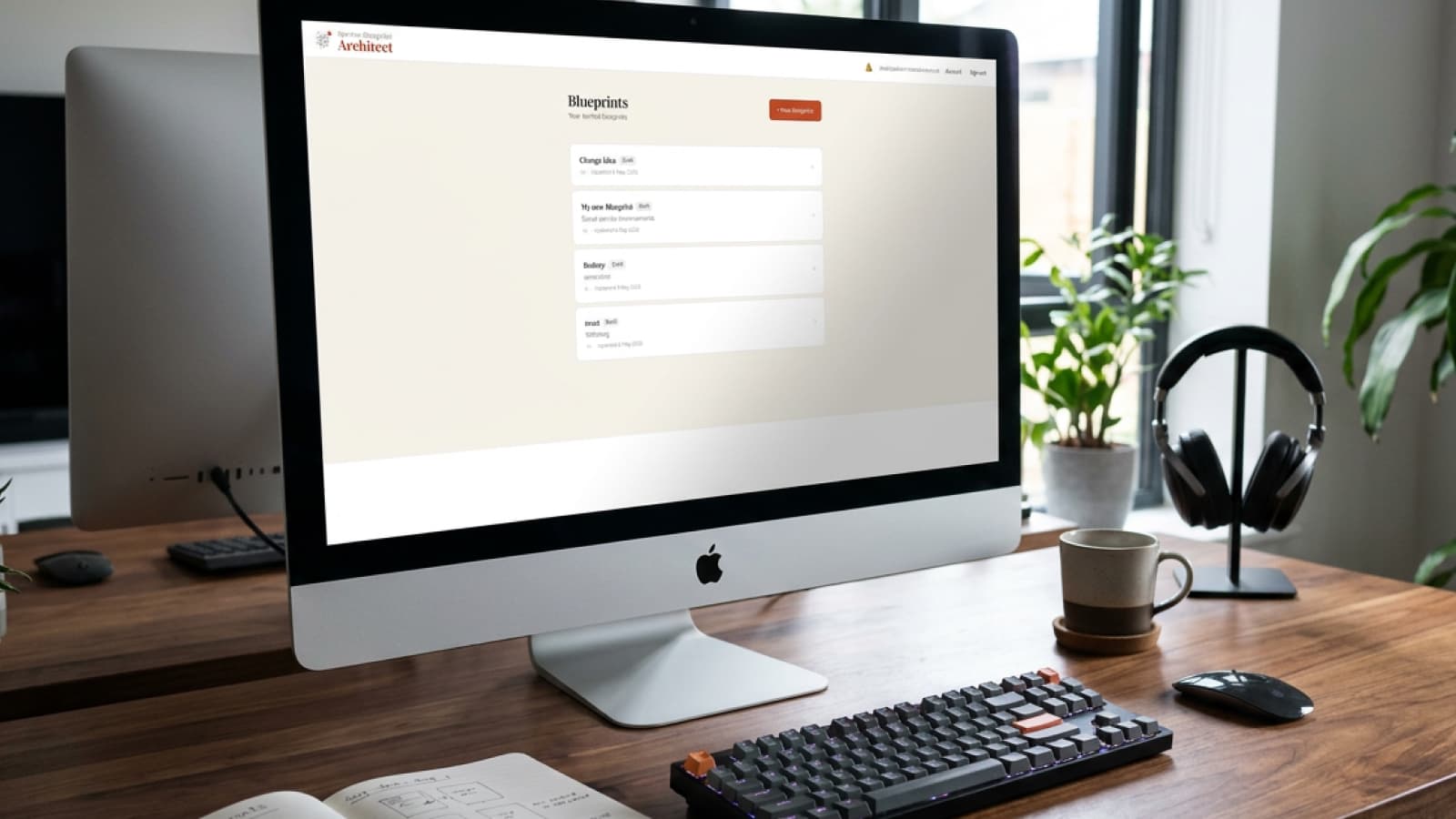
The project produced a complete, implementation-ready specification: a five-phase plan, a database schema with eight normalised tables, 26 fully defined REST API endpoints, a four-role RBAC system, a mobile-first responsive design, a WCAG 2.1 AA compliance framework, and a progress tracking system so development can pause and resume at any phase boundary without losing momentum.
Reflection
Reflection
The clearest lesson from this project was that governance is architecture — approval workflows, role separation, and version control aren't features you bolt on at the end, they're decisions that shape the entire platform from the data model upward. Choosing CMS-style staging over real-time editing wasn't a compromise; it was the right architectural fit for the domain.
Building for accessibility from the start also proved its value. Designing for keyboard navigation, semantic HTML, and clear focus states forced better UX decisions across the board — it made the mobile experience sharper, not harder.
The main thing I would do differently: validate the collaboration workflow with real service design teams earlier, before the data model is fully locked. The RBAC system reflects reasonable assumptions about team structure, but the approval workflow in particular would benefit from observational research with teams doing live governance work.
Project Gallery
Project Gallery




Next Project
Aitken Interactive Brand
→